Korea Institute of Energy Research
Korea Institute of Energy Research (KIER)
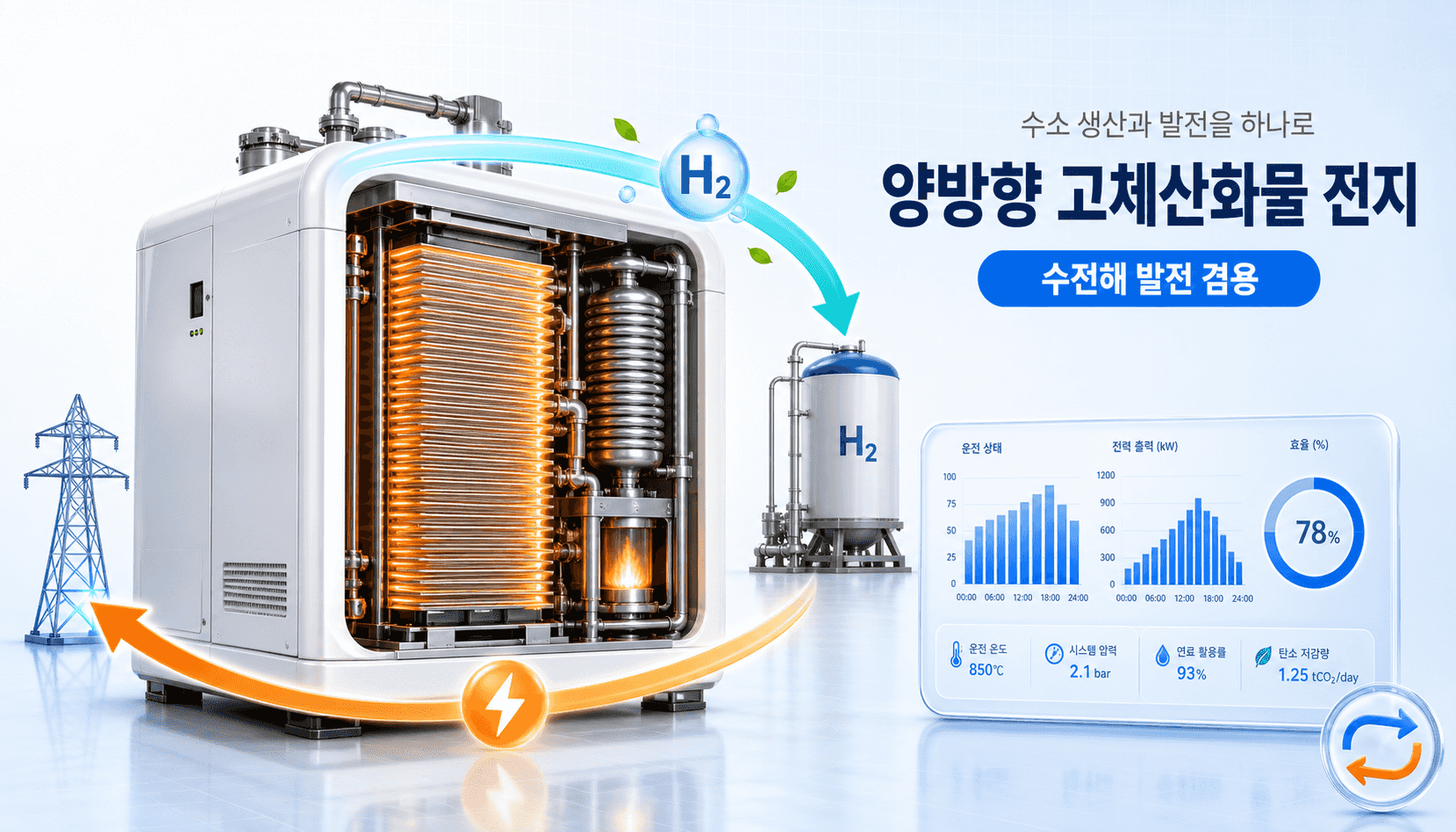
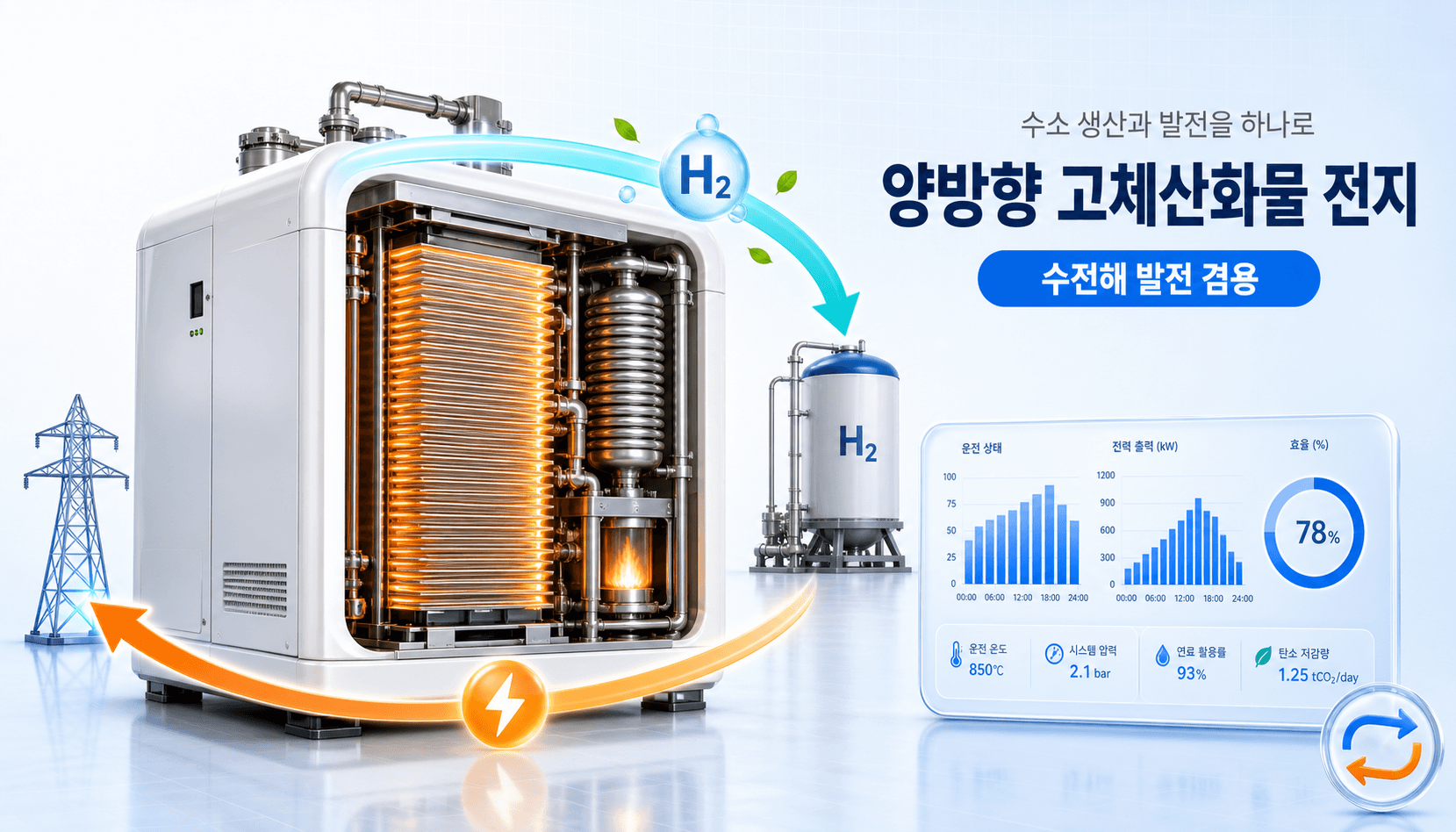
kW-class solid oxide fuel cell system capable of bidirectional operation
This is a reversible solid oxide fuel cell technology that performs both hydrogen production and power generation within a single cell.
Technology Overview
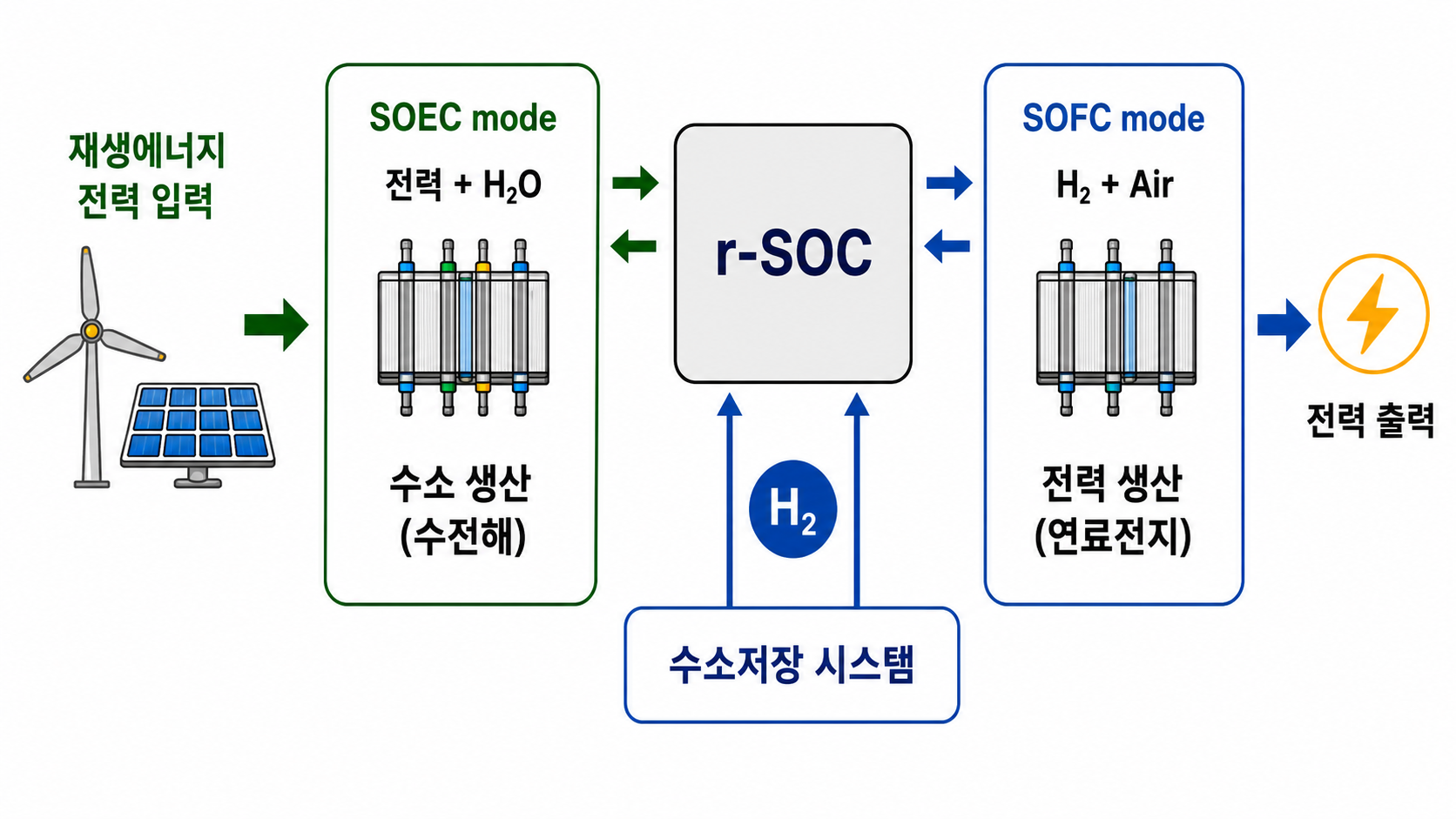
A Solid Oxide Cell-Based Bidirectional Energy System to Compensate for the Intermittency of Renewable Energy
Excess electricity is stored as hydrogen (SOEC), and the stored hydrogen is converted back into electricity when needed (SOFC)
A single system capable of both hydrogen production and electricity generation
Technology Configuration
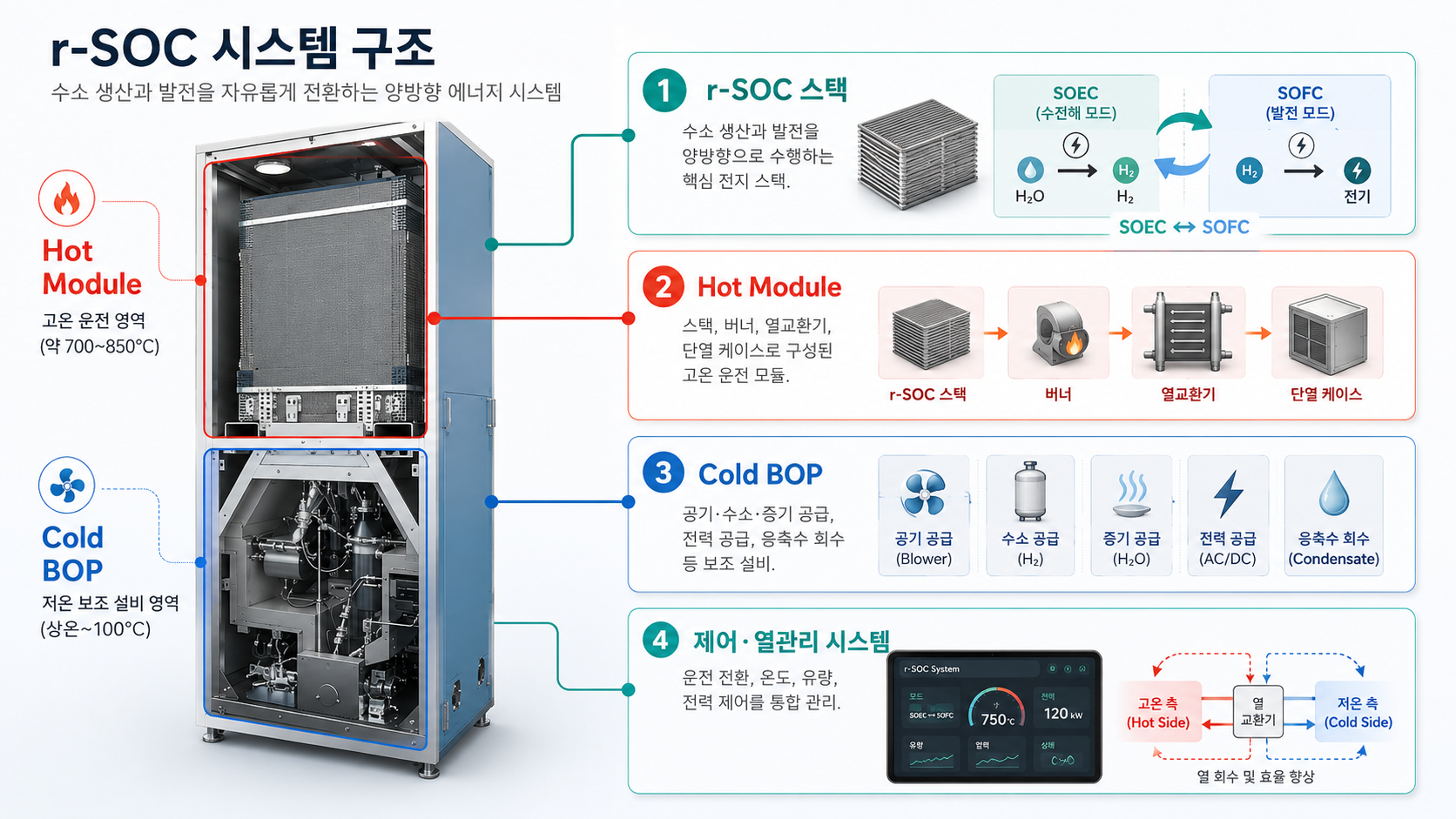
r-SOC Stack: The core cell stack that performs hydrogen production (SOEC) and power generation (SOFC) in both directions
Hot Module: A high-temperature operating module consisting of the stack, burner, heat exchanger, and insulated housing
Cold BOP: Auxiliary equipment for air, hydrogen, and steam supply; power supply; and condensate recovery
Control and Thermal Management System: Integrates management of operating mode switching, temperature, flow rate, and power control
Key Features of the Technology
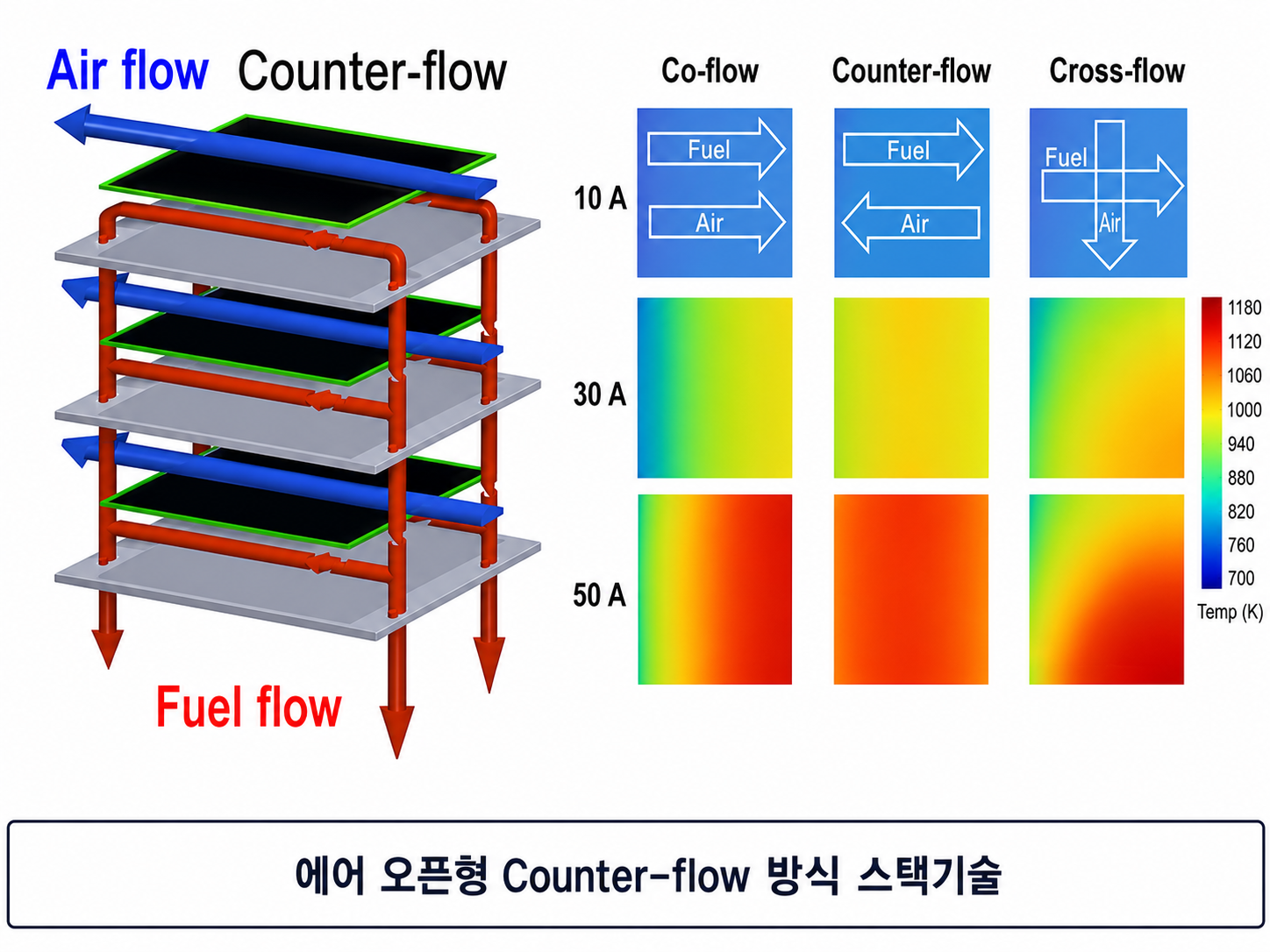
Stable bidirectional operation achieved by maintaining uniform temperature
The air-open counter-flow stack structure effectively controls air and fuel flow and maintains a uniform temperature distribution within the stack even during SOEC/SOFC mode switching → Improves high-temperature operational stability and system efficiency
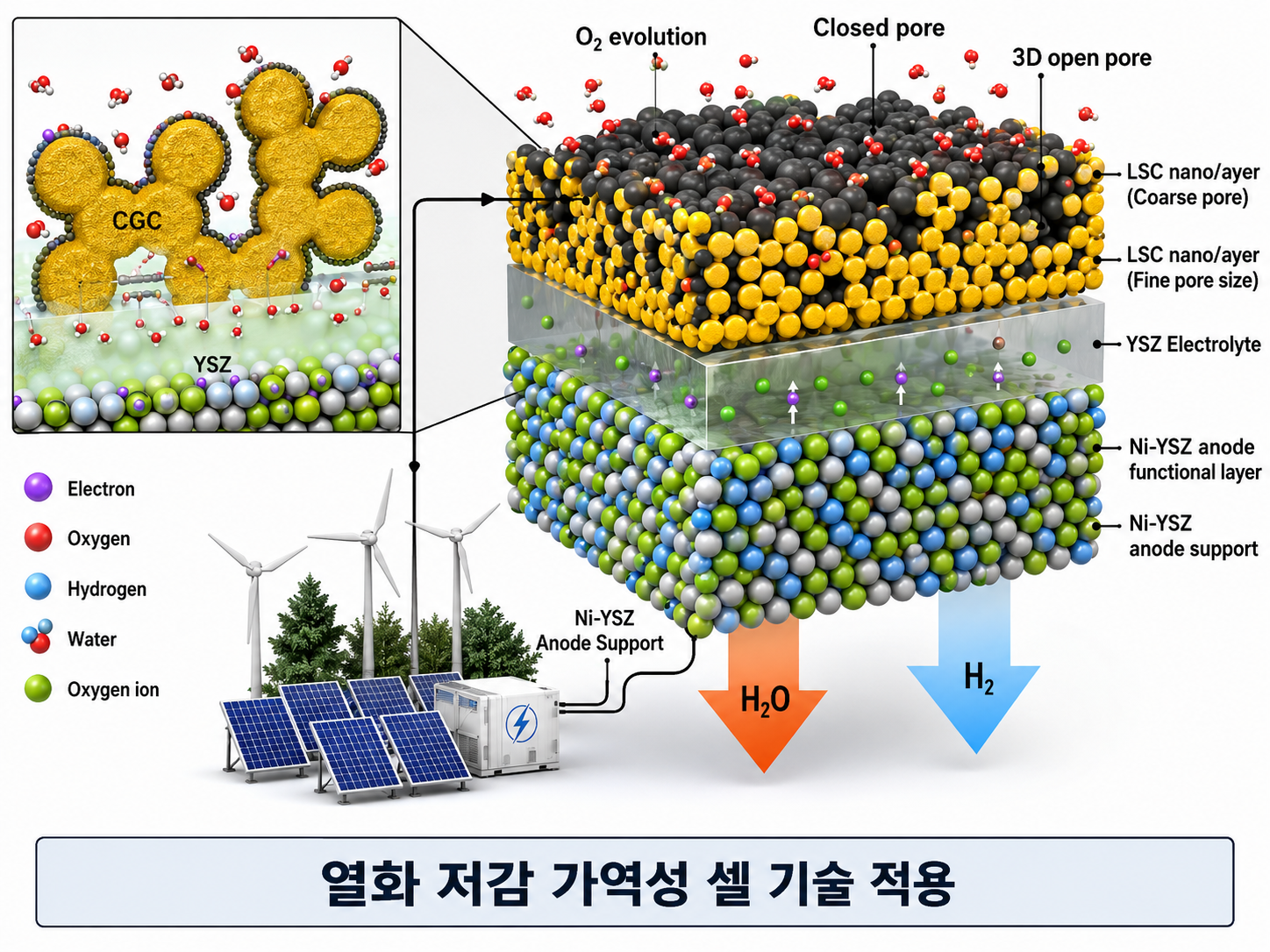
Improved durability through a cell structure that facilitates oxygen release
Designed with open-pore catalytic cells based on the infiltration process to ensure smooth oxygen discharge generated during hydrogen production mode → Minimizes air electrode delamination and performance degradation, and enhances long-term operational stability
* Infiltration process: A process in which a catalyst material is infiltrated into the microscopic pores of an electrode
TRL Stage
- 1
- 2
- 3
- 4
- 5
- 6
- 7
- 8
- 9
TRL 5
- Development of a prototype kW-class r-SOC system and performance evaluation - Verification of bidirectional operation performance and advancement based on field testing