

Korea Institute of Energy Research
Korea Institute of Energy Research (KIER)
A scaled-up manufacturing process technology capable of reducing stack manufacturing costs by more than 50% compared to current VRFB technology
A technology that manufactures the “stack”—a core component of high-capacity redox flow batteries known for their safety and long-term energy storage capabilities—using a multi-layer lamination and bonding process with thin-film materials, thereby reducing production time and labor requirements compared to conventional injection molding and machining methods, and cutting manufacturing costs by more than 50 percent.
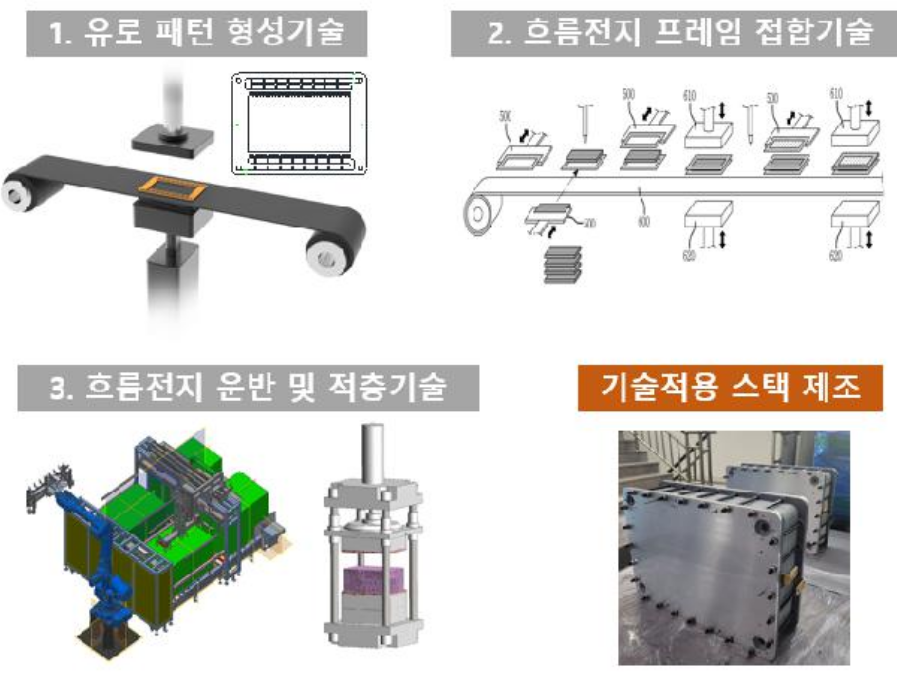
Components of the Technology
Channel Pattern Formation Technology
A technology for forming flow channel patterns to facilitate electrolyte flow, which achieves higher uniformity than conventional methods while reducing manufacturing time to 1/20 of the previous level
Flow Battery Frame Bonding Technology
A bonding technology for frame formation; a thermal fusion system that utilizes the inherent properties of the sheet metal itself, eliminating the need for conventional gaskets
Flow Battery Transport and Stacking Automation Technology
Facilitates continuous frame production and automated stacking, enabling mass production
Key Technology Details
Manufacture of Stack Components Based on a 3D Multi-Layer Bonding Process
An automated process technology that reduces the manufacturing costs of stacks—the core components of large-capacity flow batteries, which excel in safety and long-duration energy storage—enabling flow batteries to achieve price competitiveness
Applies 3D multi-layer bonding process technology, which manufactures components by bonding thin sheets with high uniformity
Adaptability to Design Changes and Mass Production
Components can be machined quickly and at low cost even when the design of cell stack components changes
Since the manufacturing process involves stacking thin sheets, automation is straightforward and mass production is feasible, enabling a cost reduction of more than 50% compared to conventional methods
Automated processes eliminate the need for manual labor and allow for rapid assembly
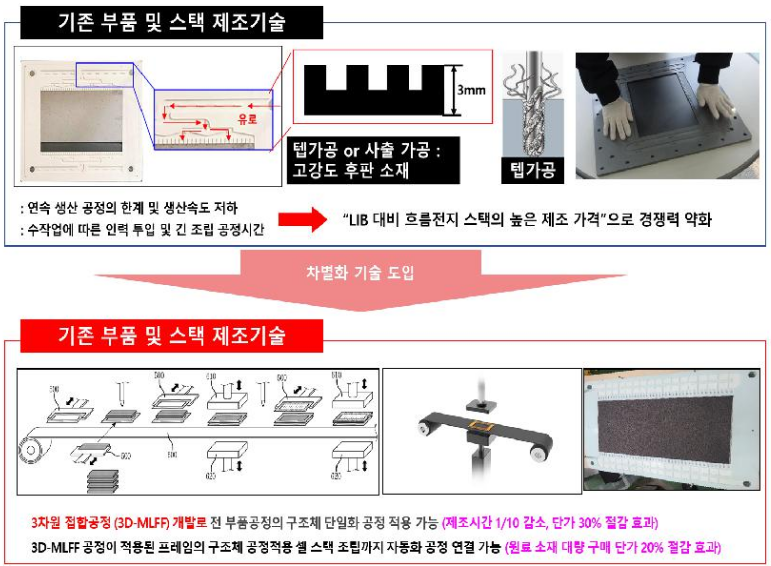
Comparative Advantages of the Technology
Existing Technology
Flow battery components are manufactured through injection molding and machining, which results in variations in thickness and frame alignment; the lengthy processing time also drives up costs
Current manufacturing methods have limitations regarding automation and mass production, requiring manual labor and a lengthy assembly process
This Technology
A 3D multi-layer bonding process that joins thin sheets with high uniformity reduces thickness and frame variations and shortens processing time
Because it uses a layered approach, automation and mass production are possible, reducing stack manufacturing costs by more than 50% compared to existing methods
Experimental and Validation Data
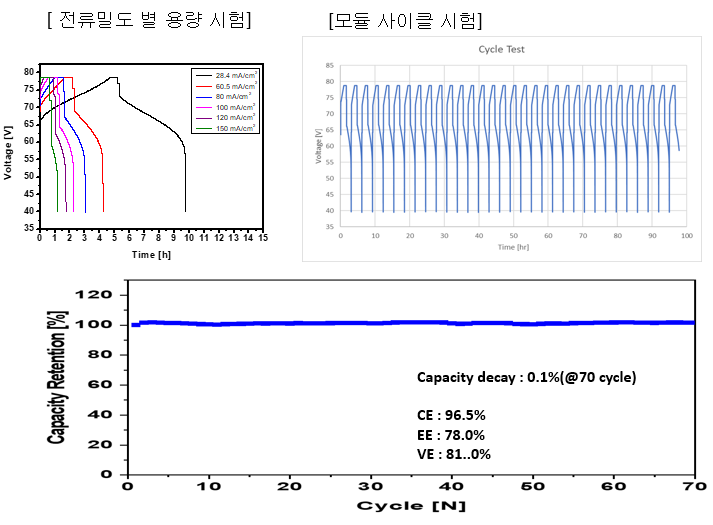
Charge-discharge tests were conducted on stacks manufactured using the 3D bonding process technology
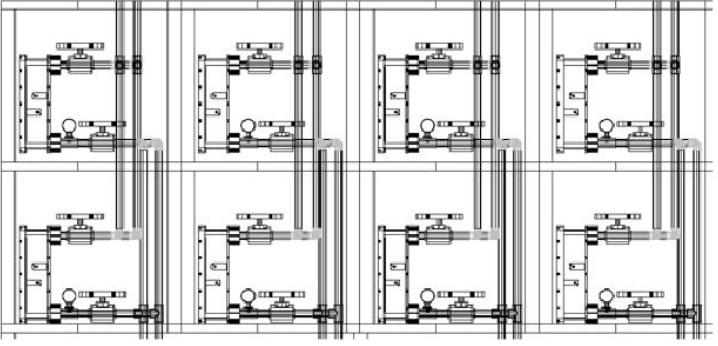
Secured design plans for 180 kW-class modules for demonstration in renewable energy integration
IP Status
| Patent Title | Application No. | Status |
|---|---|---|
| Automated Process for Manufacturing Stacks Using Thermal Bonding | 10-2025-0073127 | Application |
| Automated Stacking Process | 19/005,742 (미국) | Application |
| Method for Manufacturing Components for Redox Flow Batteries, and Redox Flow Batteries Incorporating the Same | 10-2021-0015648 | Registration |
| Method for Manufacturing Stacks and Automatic Stack Manufacturing System | 10-2024-0036939 | Application |
Applications
| Application Fields | Applicable Products |
|---|---|
|
|
TRL Stage
- 1
- 2
- 3
- 4
- 5
- 6
- 7
- 8
- 9
TRL Level 6
Stage in which pilot-scale prototype production and evaluation have been completed Stage involving large-scale investment for pilot-scale production Stage in which demonstration and field testing are conducted