Korea Institute of Energy Research
Korea Institute of Energy Research (KIER)
Standard System Technology for Vertical Farms with Improved Cooling Energy Efficiency
We support sustainable food production with a standard urban vertical farm system that significantly reduces the energy burden of cooling.
Overview of the Technology
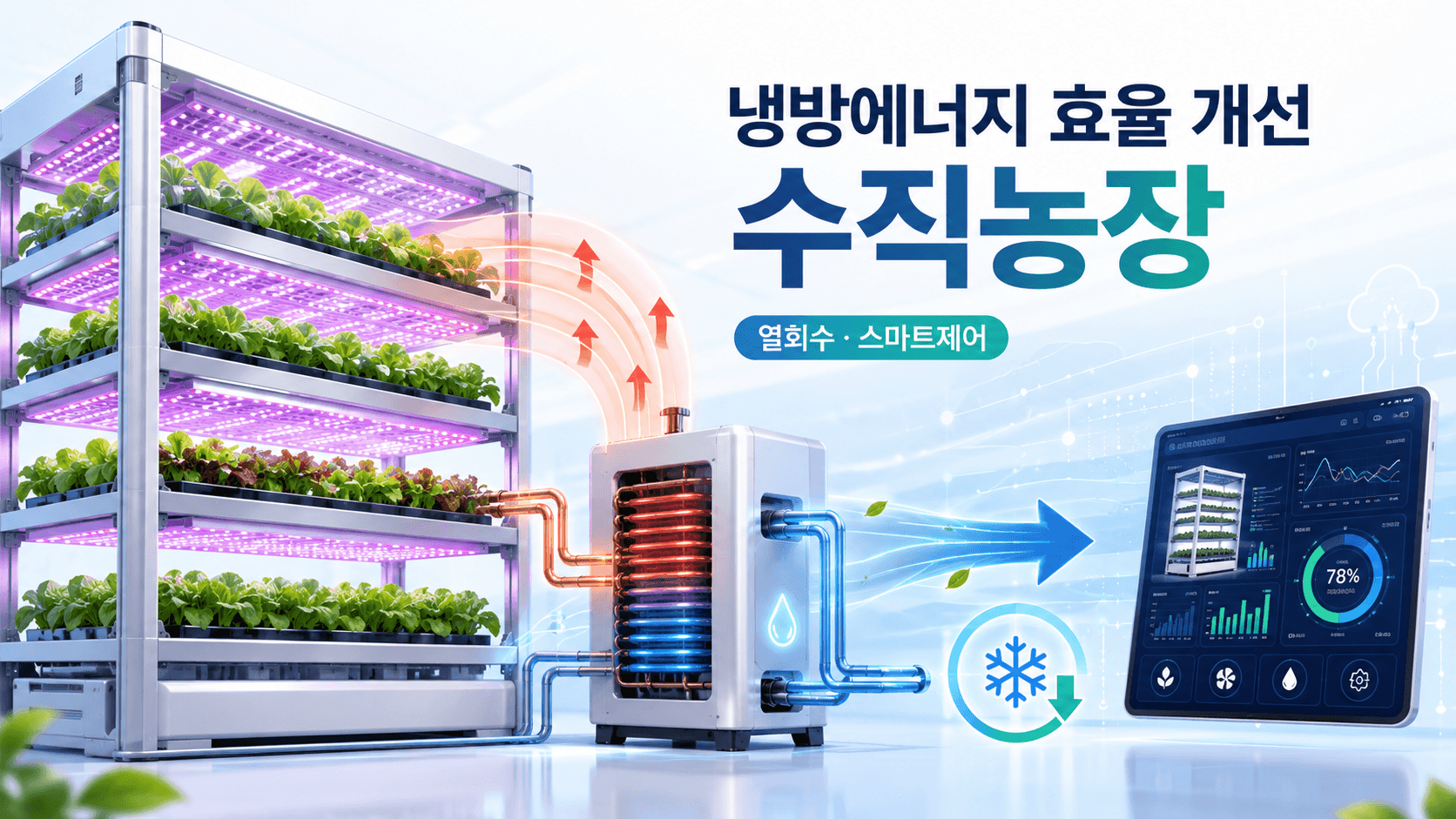
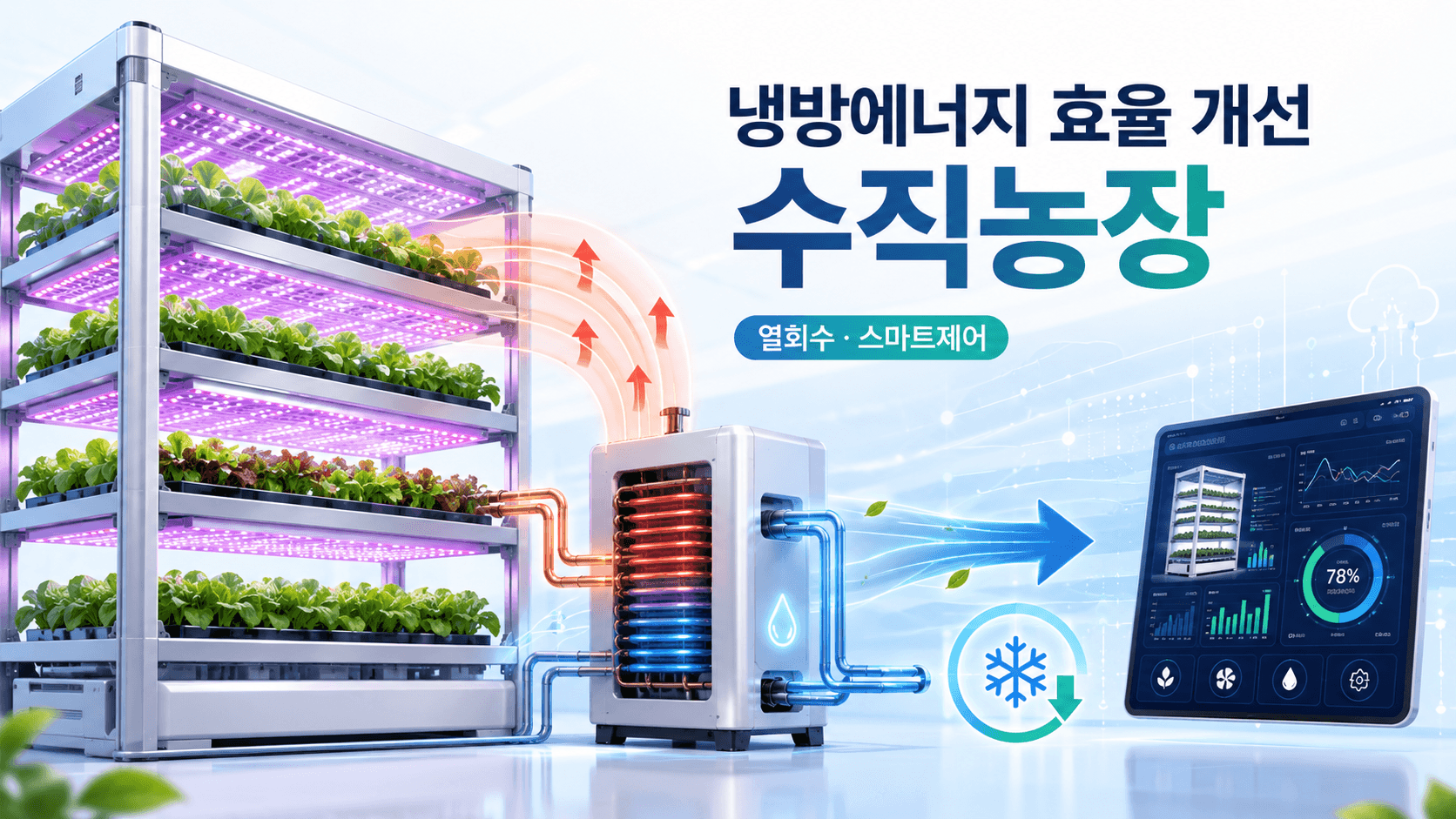
An energy-efficient vertical farming system that recovers and reuses heat generated by LED lighting to reduce cooling costs and maintain a stable growing environment for crops
Technology Configuration
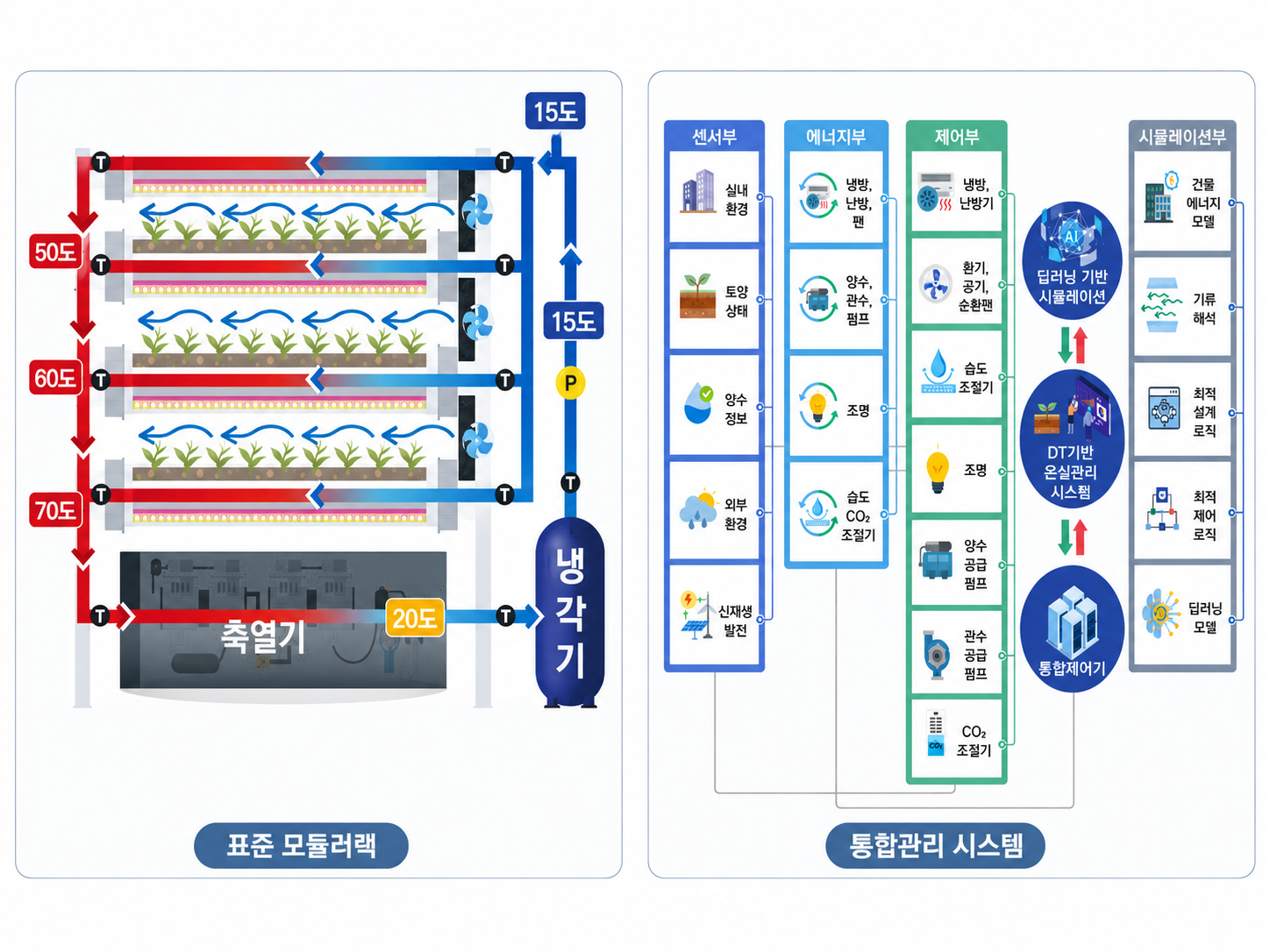
Standard modular rack for integrated vertical farming facilities
Implementation of a solution for removing conductive heat from vertical farm LEDs using water-cooling technology
Energy-saving strategy achieved through the reuse of heat generated by LEDs
Cost reduction and expanded application scope through modularization and standardization of the equipment system
Differentiators of the Integrated Energy and Environmental Management System for Vertical Farms
Providing automated design solutions for vertical farms
AI-Based Technology for Optimal Modular Rack Design and Decision Support
All-in-one solution technology for design, sensing, prediction, and control using an integrated platform that combines sensing-based monitoring and individual optimization
Development of an integrated energy and environmental system linked to crop-specific cultivation recipes
Key Features of the Technology
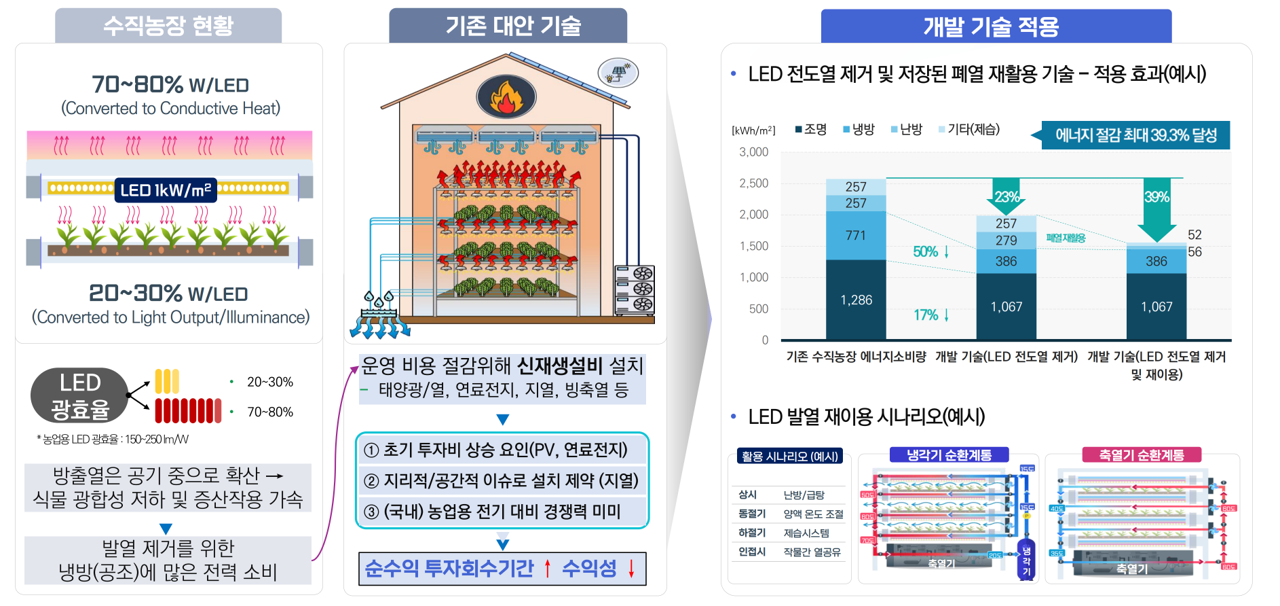
Over 50% Reduction in Cooling Energy: Significantly reduces cooling load and energy costs by blocking and recovering LED conduction heat
Stabilization of crop growth environments: Improved temperature uniformity and maintenance of an environment optimized for growth
High scalability based on standard modules: Modular design—from cultivation racks to control systems—enables easy scaling from small to large-scale operations
Reduced Operating Costs Through Energy Recycling: Maximizes energy efficiency by utilizing recovered heat for heating, cooling, and dehumidification
Utilization of Urban Underutilized Spaces: Can be applied to various spaces such as vacant retail spaces, underutilized buildings, and educational and experiential facilities
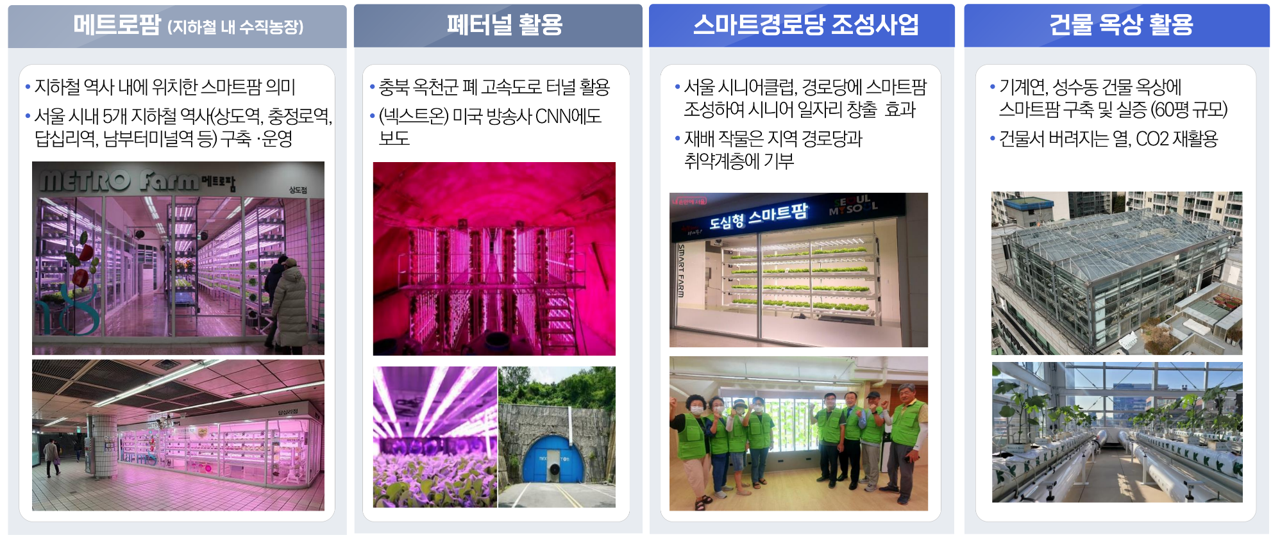
Experimental and Demonstration Data
Compared to a 50-pyeong vertical farm equipped with existing renewable energy facilities (annual net profit of 30 million won), energy savings of up to 40% are possible (Source: Korea Rural Economic Institute)
Existing vertical farms consume 2,571 kWh/m² of energy per year; it takes approximately 5 years and 8 months to recoup the 170 million won investment in solar power equipment

Applications
| Application Fields | Applicable Products |
|---|---|
Can be applied to a variety of spaces, such as vacant retail spaces, unused buildings, and educational and experiential facilities | - |
TRL Stage
- 1
- 2
- 3
- 4
- 5
- 6
- 7
- 8
- 9
TRL 6
Following the production of pilot prototypes and performance evaluations, the goal is to conduct field trials in an actual vertical farming environment and lay the groundwork for commercialization.